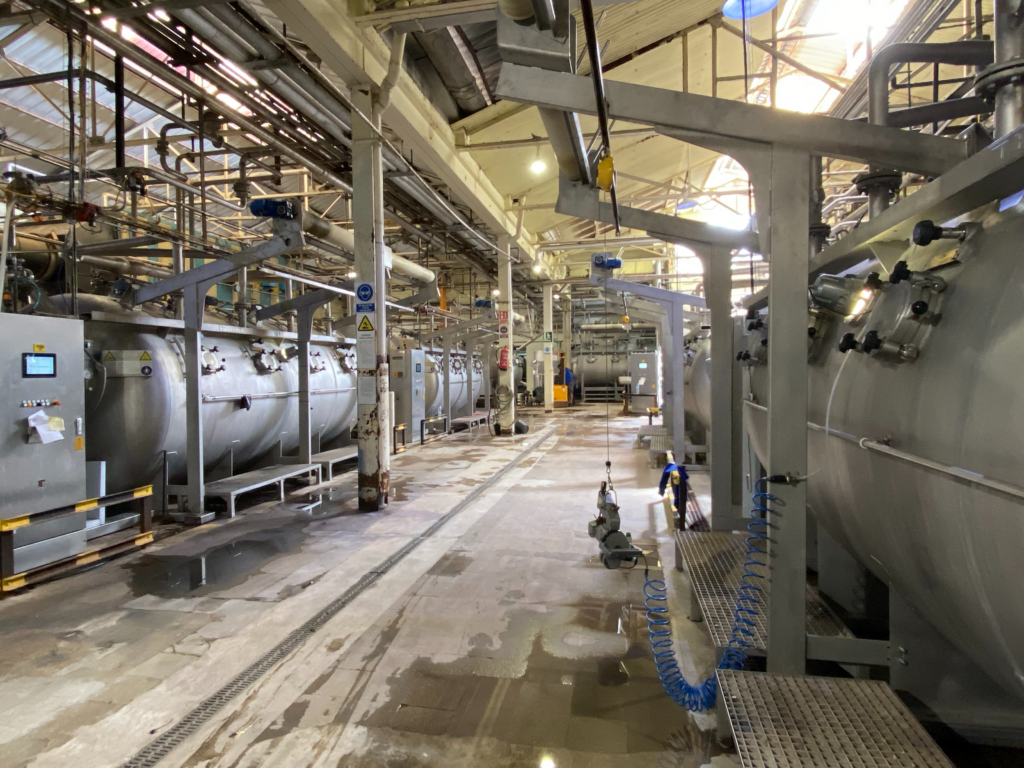
Grau, S.A. ha impulsat el projecte “Sostenibilidad en procesos de tintura y acabado mediante inversiones para el ahorro en consumos y reducción de mermas” amb l’objectiu d’augmentar el grau de protecció mediambiental de les operacions de l’empresa, a través de maquinària d’última generació i un sistema d’automatització integral i transversal a tot el procés de tintura de teixits.
El proyecto “Sostenibilidad en procesos de tintura y acabado mediante inversiones para el ahorro en consumos y reducción de mermas” cuenta con el apoyo de la Fundación Biodiversidad del Ministerio para la Transición Ecológica y el Reto Demográfico (MITECO) en el marco del Plan de Recuperación, Transformación y Resiliencia (PRTR), financiado por la Unión Europea – NextGenerationEU.
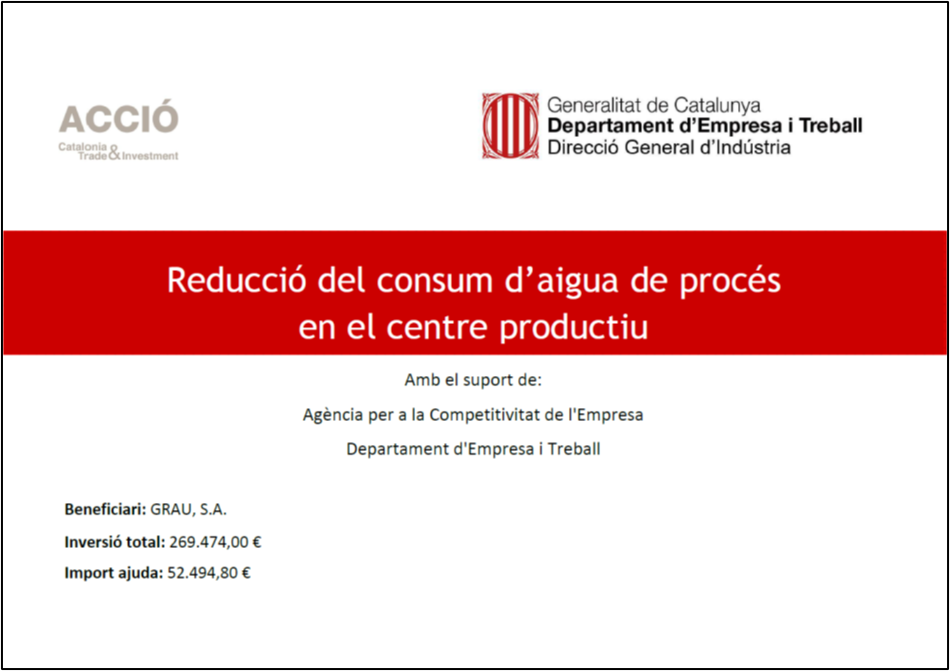
GRAU, S.A. ha rebut una subvenció pel seu projecte denominat “Reducció del consum d’aigua de procés en el centre productiu” per les seves instal·lacions de Castellar del Vallès del programa de subvencions de l’Agència per a la Competitivitat de l’empresa del Departament d’Empresa i Treball per a projectes d’inversions productives a Catalunya (Resolució EMT/810/2025). El projecte subvencionat consisteix en la substitució del sistema de pretractament de l’aigua d’entrada que es disposava de tecnologia d’intercanvi iònic (descalcificació) per incorporar un nou sistema de tractament d’aigües terciàries per recuperar pel procés productiu un 20% de l’aigua generada.
L’Ajuntament de Sabadell, ha concedit una subvenció a Grau, S.A. per la preservació i millora dels elements d’interès patrimonial de Sabadell, convocatòria publicada l’any 2023.
Grau SA ha executat el projecte “Innovació sostenible en tintura tèxtil: substitució de jets de tintura”, consistent en la renovació de la línia de tintura per models d’alta eficiència energètica. Aquesta modernització permet reduir el consum d’energia i d’aigua, optimitzar els temps de procés i disminuir les emissions de CO₂ . El projecte s’ha realitzat gràcies al suport i cofinançament del Fondo Nacional de Eficiencia Energética (FNEE) i a la convocatòria i gestió impulsades per l’Institut Català d’Energia (ICAEN), amb la coordinació i marc regulador establerts pel Real Decreto 263/2019 i l’IDAE.
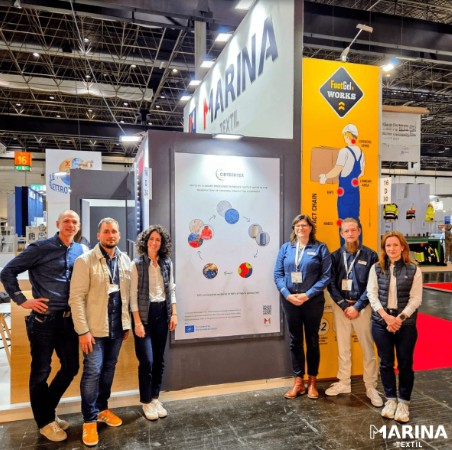
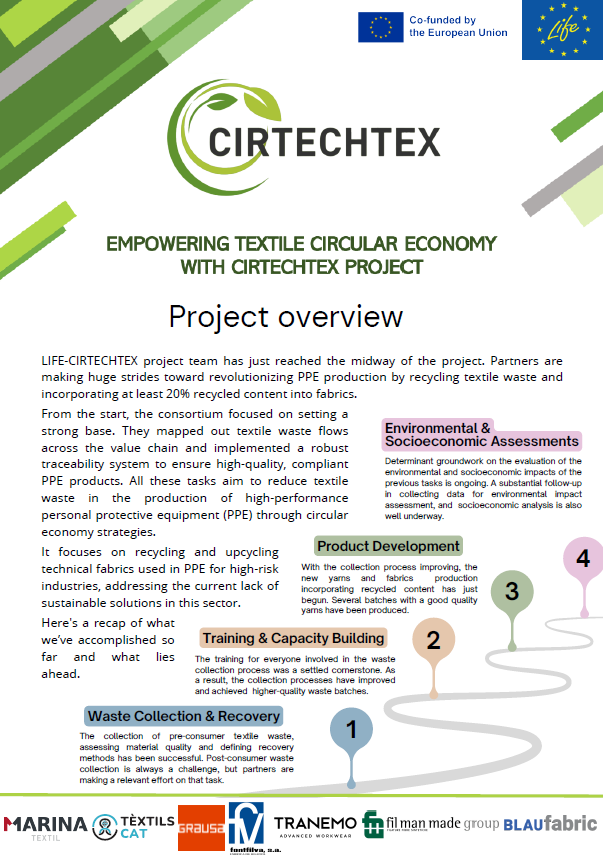
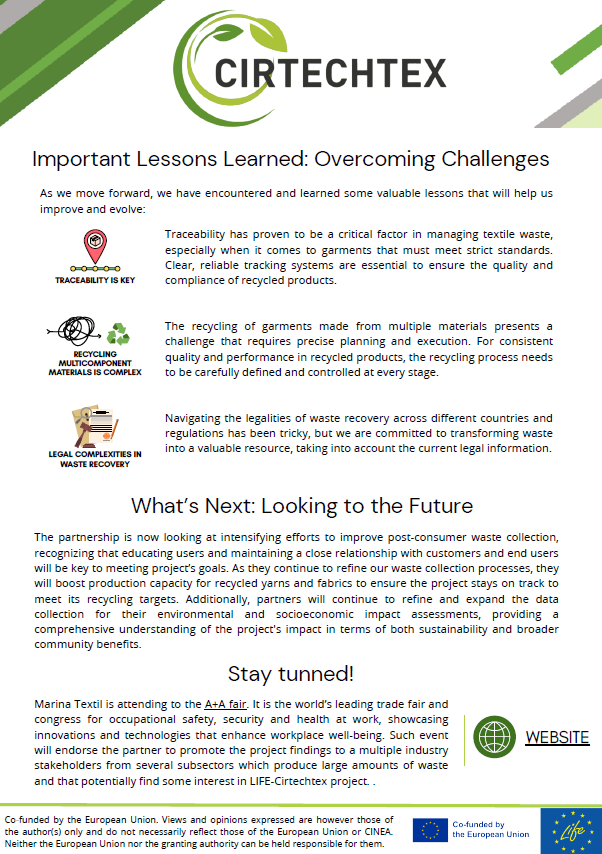
Between November 4th and 7th, the LIFE-CIRTECHTEX project was present at the A+A trade fair in Düsseldorf, Germany, one of the most important international events in the field of occupational safety, health, and technical textiles.

At this edition, Marina Textil, the project coordinator, presented the progress of CIRTECHTEX, an initiative funded by the European LIFE program that seeks to promote the circular economy in the technical textiles sector.

The project aims to develop technical fabrics using recycled material, taking advantage of the waste generated throughout the textile value chain, while maintaining the protection and performance standards required by the sector.

During the trade fair, Tranemo actively participated at the stand, which allowed them to present the project's progress and strengthen the exchange of knowledge among the partners present.

The LIFE-CIRTECHTEX consortium is made up of: Marina Textil, Tèxtils.cat, Leitat, Tranemo, Grau,S.A., Fil Man Made Group, Fontfilva, and Blaufabric.

Participation in the A+A trade fair has been a significant opportunity to raise the project's profile, share progress, and continue promoting sustainable innovation in technical textile
Grau SA ha realitzat el càlcul d’Emissions de Gasos d’Efecte Hivernacle (petjada de carboni) i Pla de reducció d’Emissions d’abast 1 i 2 amb el suport d’ACCIÓ en el marc del Programa ProACCIÓ Green que es du a terme en col·laboració amb el Departament d’Acció Climàtica, Alimentació i Agenda Rural i el Fons pel Canvi Climàtic de la Generalitat de Catalunya.
Last May, the Sabadell City Council awarded Joan Grau i Tarruell, fourth generation of Grau, S.A., with the Sabadell Business Network Award. An award that highlights not only his career at the helm of Grau, S.A., but also his commitment to the city and its productive fabric.

Read the full story at the following link:

https://www.diaridesabadell.com/diners/fotos-primera-nit-teixit-empresarial-sabadell.html
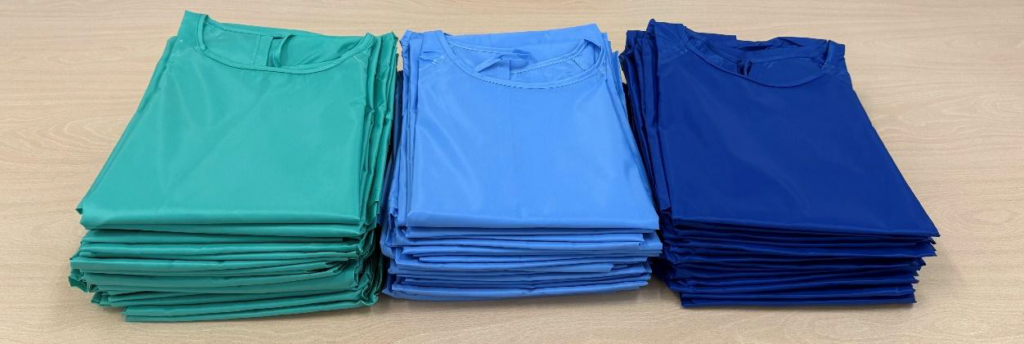
L’objectiu principal d’aquest projecte va ser la recerca i desenvolupament d’un nou teixit sostenible i amb propietats tècniques avançades per al sector hospitalari, utilitzant un nou acabat antimicrobià d’origen natural, obtingut a partir dels residus de crustacis; i fibres reciclades, desenvolupat per GRAU, S.A. en les seves instal·lacions situades al Carrer del Riu Ripoll s/n, 08211 Castellar del Vallès, Barcelona i finançat per l’Agència de Residus de Catalunya (ARC) per a projectes de foment de l’Economia Circular – convocatòria ACC/3552/2022, romanent a la classe B: Estudis d’obtenció i testatge de projectes demostratius de nous productes o serveis, dins de la categoria 1: Ecodisseny de productes o serveis.
Respecte al medi ambient, el projecte ha abordat diverses problemàtiques ambientals, com la reducció de residus plàstics i tèxtils mitjançant la incorporació dels fils reciclats, fomentant així la reutilització de materials i disminuint l’impacte dels residus generats per roba en desús o restes de producció. També es va aconseguir minimitzar l’ús de productes d’un sol ús, com les bates hospitalàries, promovent alternatives reutilitzables amb major durabilitat i millors propietats tècniques. A més, es van substituir els acabats antimicrobians tradicionals, per residus d’origen natural i de baix impacte ambiental, com és el quitosà. Finalment, amb els resultats obtinguts en el projecte es contribueix a la reducció de residus alimentaris i naturals, aprofitant les restes de crustacis que, d’altra manera, acabarien en abocadors o sent desaprofitats en la naturalesa.
Al llarg del projecte, GRAU, S.A. ha dut a terme un estudi complet que va començar amb una recerca de l’estat de l’art i selecció de matèries primeres, com teixits de polièster reciclat (rPES) i dispersions de quitosà, obtingut de residus de crustacis, així com diversos productes auxiliars necessaris per al nou acabat. Posteriorment, es van desenvolupar les fórmules dels acabats químics, destacant un nou acabat antimicrobià natural basat en quitosà, avaluant la seva eficàcia, estabilitat i compatibilitat amb els teixits reciclats. A continuació, es va definir el teixit base reciclat més adequat per a bates hospitalàries reutilitzables, considerant paràmetres tècnics com gramatge, estructura i resistència. En la fase final, es va configurar el teixit definitiu, aplicant els acabats estudiats en condicions reals de producció, optimitzant variables com concentracions, temperatura i assecat. Finalment, es va realitzar un estudi de viabilitat tècnica, econòmica i ambiental, incloent-hi una anàlisi del cicle de vida del producte desenvolupat, extraient unes conclusions finals que van confirmar la viabilitat del nou teixit sostenible per al sector sanitari, complint amb els requisits tècnics i mediambientals establerts.
GRAU, S.A. ha dut a terme amb èxit aquest projecte, aconseguint teixits a partir de polièster reciclat (rPES) i residus d’origen natural, com els crustacis, per a conferir-los propietats antimicrobianes. Aquests teixits, dissenyats per a la confecció de bates hospitalàries reutilitzables, destaquen per la seva resistència a les rentades, la qual cosa permet substituir productes d’un sol ús per opcions més sostenibles. A més, ofereixen característiques tècniques com resistència, facilitat de neteja, efecte hidròfob i propietat antimicrobiana, contribuint així a la reducció de residusi a la cura del medi ambient.
• Subvenció atorgada: 60.000,00€ • Termini d’execució: Des del 01/01/2024 al 31/12/2024 • Codi d’expedient: ARC027/22/000138
2024 has been an intense year in the textile sector, as usual. But it has also been a special year for Grau, SA, which has been recognized with two awards that honor us and that are the result of many years of effort and work.
The Sabadell Chamber of Commerce and Industry has awarded us the Longevity Award for our 156-year history.
The Cotton Industry Foundation (AITPA) has awarded us the Innovation Award, according to the prestigious Jury, for the following reasons:
“The Innovative Company of the Year award has been awarded to Grau S.A., recognized for its leadership in the integration of sustainable technologies and cutting-edge processes. Its innovative approach to manufacturing and resource management positions the company as a benchmark in the sector. The jury has highlighted its ability to combine technical excellence with environmental commitment, demonstrating that innovation is the key to business success in a constantly evolving market.”